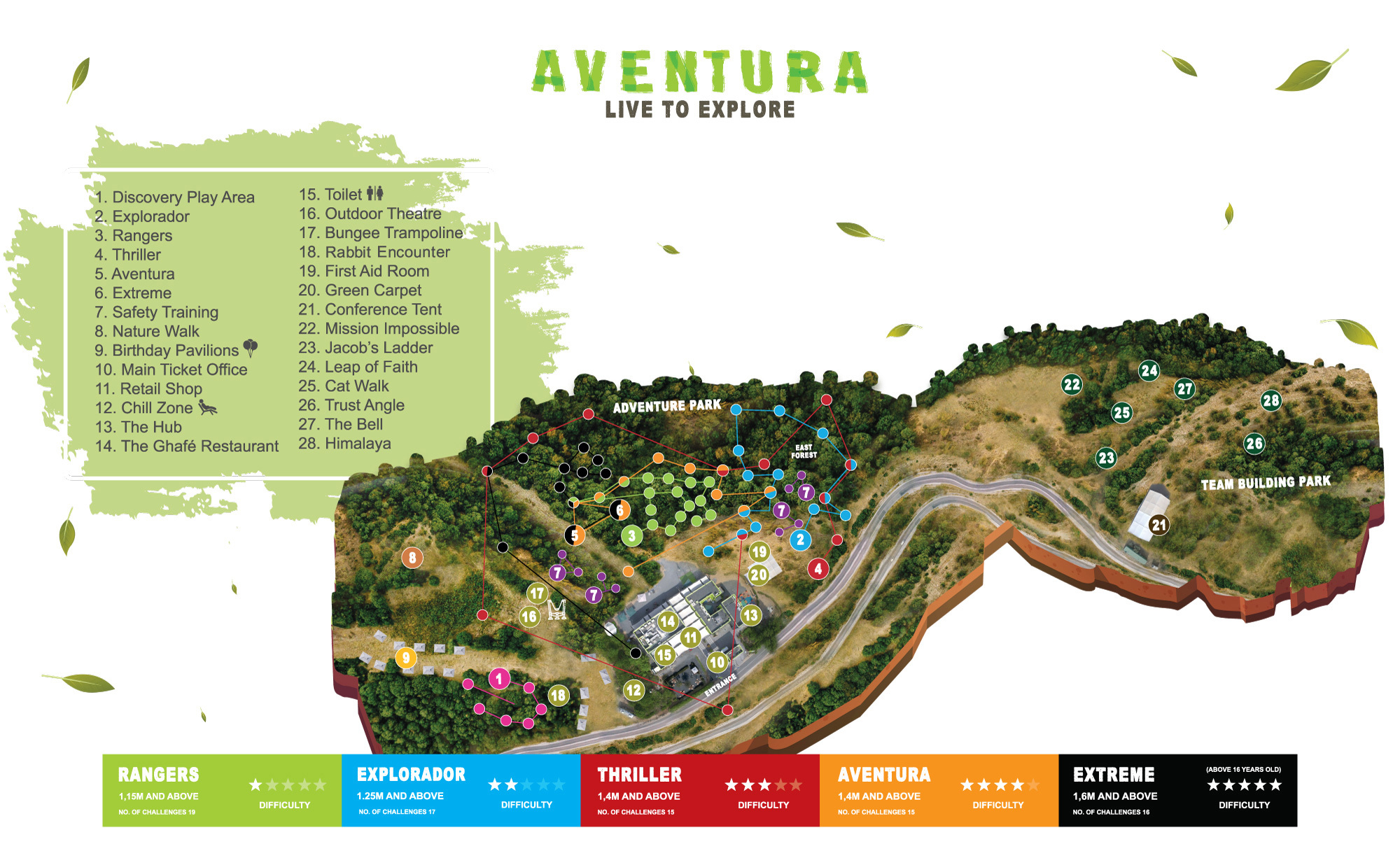

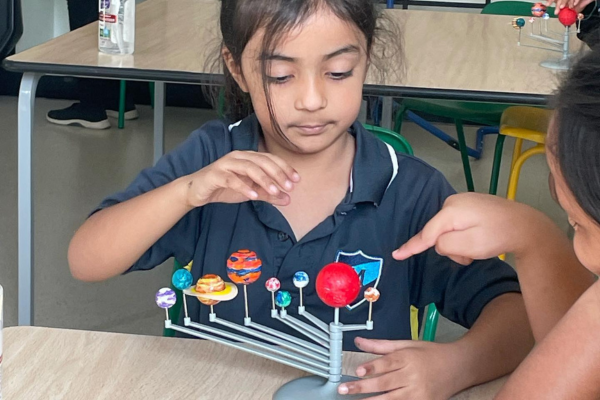
Parents and teachers often wish children enjoyed science more, but many activities still make learning feel passive. Kids sit, watch, and listen, yet the lesson doesn’t always stay with them. Curating a meaningful science for kids experience needs more than a classroom explanation; it requires curiosity, movement, and the chance to explore ideas in real time. At Aventura Parks, Science Made Fun transforms indoor and outdoor spaces into practical learning environments where children test, observe and interact with what they’re learning. Instead of treating science as a performance, the program makes it active and memorable. If you’re looking for a rich science for kids’ program, this is where the difference becomes clear.
Quick Summary
- Aventura offers science for kids through hands-on indoor and outdoor STEM learning. Children engage with their environment and build understanding through action.
- Young learners take part in guided, practical science experiments for kids instead of passive demonstrations.
- The program supports school trips, birthdays, camps and inclusive learning, making it versatile for many group types.
- Indoor and outdoor learning helps children understand science concepts more clearly by connecting theories to real examples.
- The experience builds confidence, curiosity and problem-solving skills that last beyond the day.
What Good Science for Kids Should Actually Do
A strong learning experience should do more than entertain kids for an hour. Effective science for kids helps them form questions, ask better questions and link lessons to something they can do or observe.
This means a session should include:
- A simple concept children can explore, rather than a complex topic they can only watch.
- A practical activity they can participate in, turning abstract ideas into tangible experiences.
- A setting that helps the lesson feel real, so the environment reinforces the concept.
- An outcome that strengthens confidence, not just recall, ensuring children feel capable and curious.
When these elements are missing, children may enjoy the moment but forget the lesson. When they’re present, learning becomes easier to remember and more rewarding.
Why Science for Kids Works Better When It Is Hands-On
Children usually learn better when they can interact with a topic directly. That’s especially true with science for kids, because science feels more approachable when it’s experienced rather than explained.
At Aventura, children aren’t just told how something works. They’re encouraged to watch, test, compare and discuss. This shift improves learning in several ways:
- Improved focus, because kids stay active instead of becoming distracted.
- Better retention, as they connect learning to physical actions and observations.
- Encouraged curiosity, since the session feels exploratory rather than prescriptive.
- Greater confidence, as children participate and see they can grasp the material.
- A more approachable view of science, making STEM feel less intimidating.
Hands-on programs often outperform lecture-style activities because they encourage involvement rather than passive observation.
How Aventura Makes Science for Kids Feel Natural
The program’s setting is as important as the activities themselves. Whether indoors or within Mushrif Park’s Ghaf forest, children can connect science to the world around them instead of abstract examples on paper.
Science for Kids Becomes Easier to Understand Indoors and Outdoors
In a guided learning setting, children can immediately relate ideas to what they see. For example:
- Environmental science connects to trees, soil and the biodiversity around them.
- Physics connects to motion, force and balance they can feel and test.
- Sustainability connects to planting and conservation, linking theory to action.
- Observation becomes a live activity, not a worksheet task, as they look closely at the world.
This approach makes science for kids feel less theoretical and more practical. Instead of imagining a lesson, children interact with it in real time.
Science for Kids Becomes More Memorable Through Movement
When children move, explore, and solve small challenges, lessons tend to stick. At Aventura, science learning happens through guided workshops, nature observation, simple machine concepts, and activity-based problem-solving. Kids often remember:
- What they did, because actions create memory.
- What surprised them, because new experiences make an impression.
- What they discovered on their own, because self-discovery drives curiosity.
Movement-led science for kids creates stronger recall than passive demonstrations because it actively engages the senses.
The Role of Science Experiments for Kids in Real Learning
One of the program’s strengths is its practical, guided science experiments for kids. These activities help children learn by doing, not by watching someone else perform a demonstration.
The goal isn’t entertainment; it’s participation. Children handle materials, make decisions and see the results for themselves.
Science Experiments for Kids That Build Real Understanding
At Aventura, science experiments for kids can include:
- Planting seeds to learn about growth and ecosystems, watching the process unfold over time.
- Building simple machines inspired by the park’s zipline system, linking motion and force to mechanics.
- Exploring force and motion through guided examples, using ropes and pulleys to feel the effects.
- Biodiversity observation via nature-based activities that highlight habitats and ecosystems.
- Sustainability activities tied to conservation and responsible resource use.
Each activity teaches a scientific concept and supports skills like observation, communication and reasoning.
Science Experiments for Kids Should Be Guided, Not Random
A good science activity for children should be fun but also structured. Without guidance, it becomes entertainment only.
The most effective format allows children to:
- Observe what is happening, so they pay attention to details.
- Ask a question, encouraging them to engage critically.
- Test an idea, giving them agency to experiment.
- Explain what they noticed, fostering reflection and expression.
- Connect the experience back to a simple concept, anchoring the lesson.
This process makes science experiments for kids valuable both at school and at home.
What Children Learn Beyond the Experiment
The biggest value in well-designed science for kids isn’t just the science itself. It’s the broader set of skills children develop while learning.
At Aventura, the program helps children build:
- Curiosity, by inviting questions and exploration.
- Critical thinking, by having them compare and interpret results.
- Problem-solving, through activity-based learning that encourages trial and error.
- Self-confidence, because they participate directly and see their own progress.
- Communication, by discussing ideas with peers and instructors.
These benefits last longer than a single session and support future learning.
Learning Table: Activity vs. Outcome
| Activity Type | Science Focus | Skill Children Build | Why It Works |
|---|---|---|---|
| Seed planting | Growth, ecosystems, sustainability | Observation and patience | Shows natural processes and links children to nature |
| Simple machine building | Motion, force, mechanics | Problem-solving | Makes abstract physics easier to understand |
| Nature walks | Biodiversity, habitats | Curiosity and questioning | Turns the environment into part of the lesson |
| Guided group challenges | Applied STEM thinking | Teamwork and confidence | Makes learning social and active |
| Hands-on science games | Cause and effect | Participation and recall | Ensures children remember what they actively do |
A Real Example of Science for Kids in Action
Picture a school group arriving at Aventura for a field trip or workshop. Instead of starting with a lecture, the instructor begins with a question: “How does balance work?” Children look around, observe the setting, and think about where they see balance in action.
Next, they head into a guided activity. Some students build simple machines using ropes and pulleys, testing how force works. Others take part in a nature-based session to explore biodiversity and see how insects and plants interact. The children talk, experiment, and compare ideas as they move through the experience.
By the end, the session feels less like a mandatory lesson and more like a discovery they made themselves. That’s what effective science for kids is all about.
Who Is This For?
This format of science for kids suits:
- Parents seeking educational activities with real value, where children actively learn.
- Schools looking for stronger field trip outcomes, combining curriculum links with engagement.
- Families wanting learning that doesn’t feel rigid, so children stay interested.
- Children who thrive on movement and exploration, rather than sitting still.
- Organizers planning educational birthdays or camps, offering something different from typical entertainment.
- Mixed-ability groups needing inclusive, guided activities, where participation is accessible to everyone.
The program is ideal for children who learn better through hands-on experience than through passive listening.
Where It Fits Best
Aventura’s structure adapts to various needs, making it suitable for multiple use cases.
For School Field Trips
Schools can use the program to reinforce science lessons in a way that feels more engaging than classroom instruction. The activities also build teamwork and confidence among students.
For Birthday Experiences
Birthday parties become more meaningful when children participate in guided science experiments for kids. Instead of only entertainment, they leave with new knowledge and memories.
For Camps
Camps provide repeated exposure, so children revisit concepts and gradually build confidence with STEM learning over multiple sessions.
For Inclusive Learning
The program is non-competitive and adjustable, helping children with different needs participate comfortably and successfully.
How Parents and Schools Can Get More Value From It
To make science for kids more effective before and after a session, follow these steps:
- Set one clear learning goal – decide whether you want to focus on curiosity, practical science or group engagement.
- Prepare the child for active participation – explain that they’ll be exploring and testing ideas, not just watching.
- Encourage questions during the session – the more kids ask, the more they engage with the topic.
- Talk about one key takeaway afterward – discuss what they noticed, what surprised them, and what they want to try again.
- Repeat the learning at home when possible – simple follow-up activities reinforce the lesson and make it stick.
This approach turns one visit into a deeper learning cycle and helps children internalize the concepts.
Pros & Cons
Pros
- Strong engagement through participation, keeping children interested.
- Practical science experiments for kids, rather than passive demonstrations.
- Indoor and outdoor settings make lessons easier to understand, linking theory to the real world.
- Support for confidence, curiosity and teamwork, building soft skills alongside scientific knowledge.
- Flexibility for schools, birthdays and camps, making the program accessible for many groups.
Cons
- Sessions require planning around comfort and timing, especially when outdoor elements are involved.
- Larger groups need clear coordination, to ensure everyone participates comfortably.
- Not ideal for children expecting completely unstructured free play, since the activities follow a guided format.
Common Mistakes to Avoid
If your goal is better science for kids, steer clear of these mistakes:
- Choosing visuals over learning quality – a flashy activity can still teach little if it lacks depth.
- Assuming all science activities are equally effective – how a lesson is delivered matters as much as the topic.
- Ignoring the value of hands-on learning – children grasp more when they actively participate.
- Not matching the activity to the child’s age or needs – the right format increases both engagement and confidence.
- Treating science as only academic – the best science for kids connects learning to real experiences and practical discovery.
FAQ
Why is hands-on science for kids more effective than passive learning?
Because children understand and remember more when they test, observe, and interact with the lesson rather than simply listening to it.
Are there real science experiments for kids at Aventura?
Yes. The program includes guided, practical science experiments for kids that cover nature, sustainability, motion, and simple machines.
Is this suitable for schools?
Absolutely. Aventura supports school field trips, and Science Made Fun offers curriculum-aligned in-school workshops that can adapt to different education systems.
Is it suitable for younger children?
Yes. The program includes age-appropriate activities designed to encourage curiosity and critical thinking in younger learners.
Inspiring Future Scientists in the Ghaf Forest
For science for kids to be memorable and genuinely engaging, the learning must go beyond passive explanation. Aventura Parks’ partnership with Science Made Fun does this by combining indoor and outdoor exploration with practical, guided science experiments for kids. Children leave with a deeper understanding of concepts, greater curiosity and a sense of accomplishment. For parents, schools, and organizers seeking meaningful science for kids and better science experiments for kids, this approach offers far more value than a standard sit-and-watch activity.
Science Made Fun at Aventura Parks shows that science becomes truly engaging when children can experiment, explore, and discover ideas for themselves. Whether through guided activities indoors or hands-on learning outdoors, these experiences spark curiosity and build confidence in young minds. Visit aventuraparks.com to plan your next school trip or family learning adventure.